One schedule for visits, cover and the ironing depot
SIMA Service, a service-voucher company in Brussels, schedules home visits to clients every week and takes in ironing at its depots. Belvi built the schedule with cover for absences, an app for the workers and an app for the counter, around one shared server.
The challenge
A service-voucher company (titres-services in Belgium) works in the client's home. Workers go to the same households on the same days. Alongside that, ironing comes in through the depots and an in-house laundry.
Clients do not choose such a company on price: the value of a service voucher is fixed by law. What counts is whether someone turns up when the regular worker is ill or on leave.
That puts a lot of weight on one place: the schedule. Who goes where, who can step in, and who already knows that client. The person who plans works in French and is not a technical user. At the counter of a depot there is another audience again: staff who write an ironing ticket with a client in front of them, and who do not all read French with ease.
The system
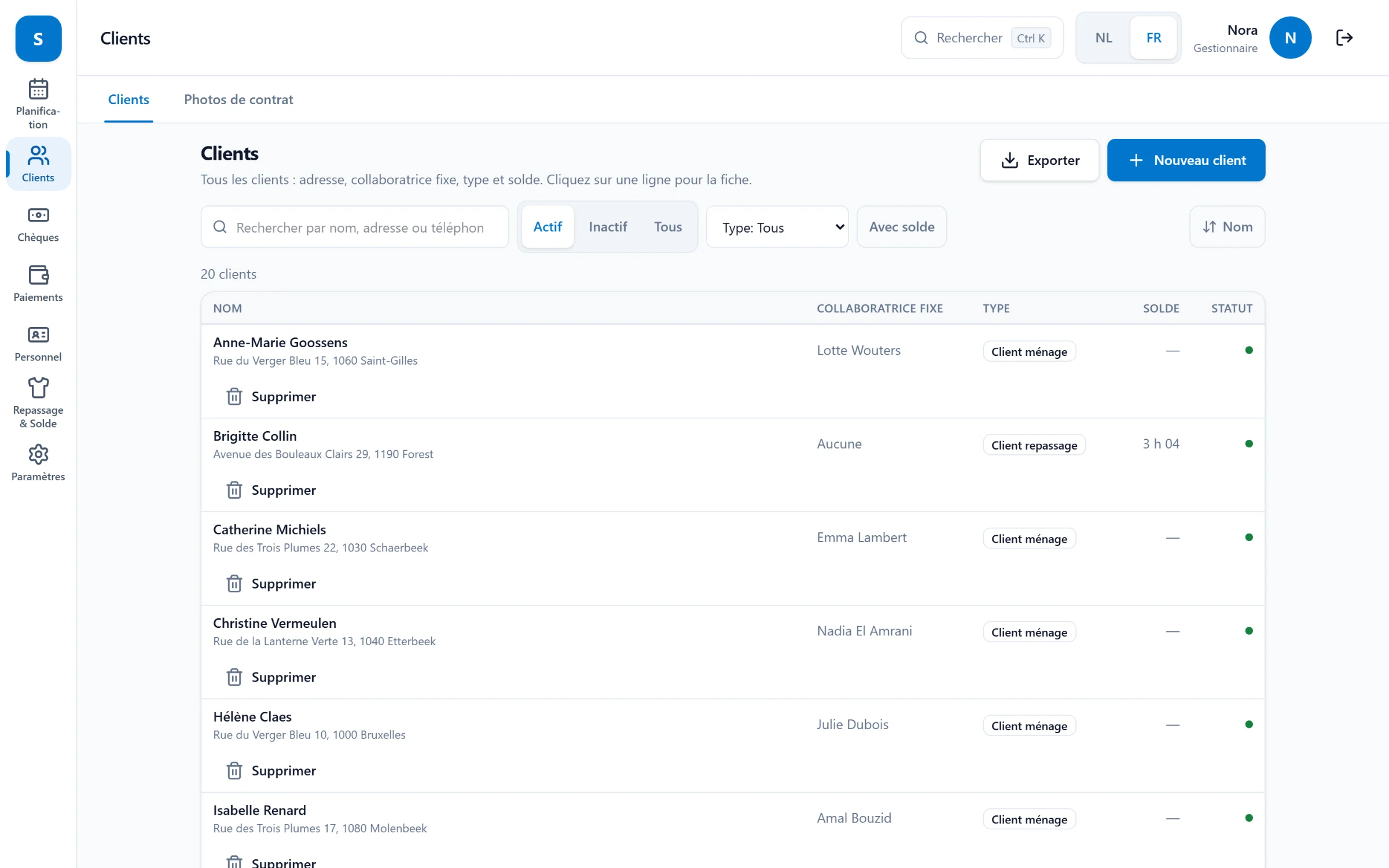
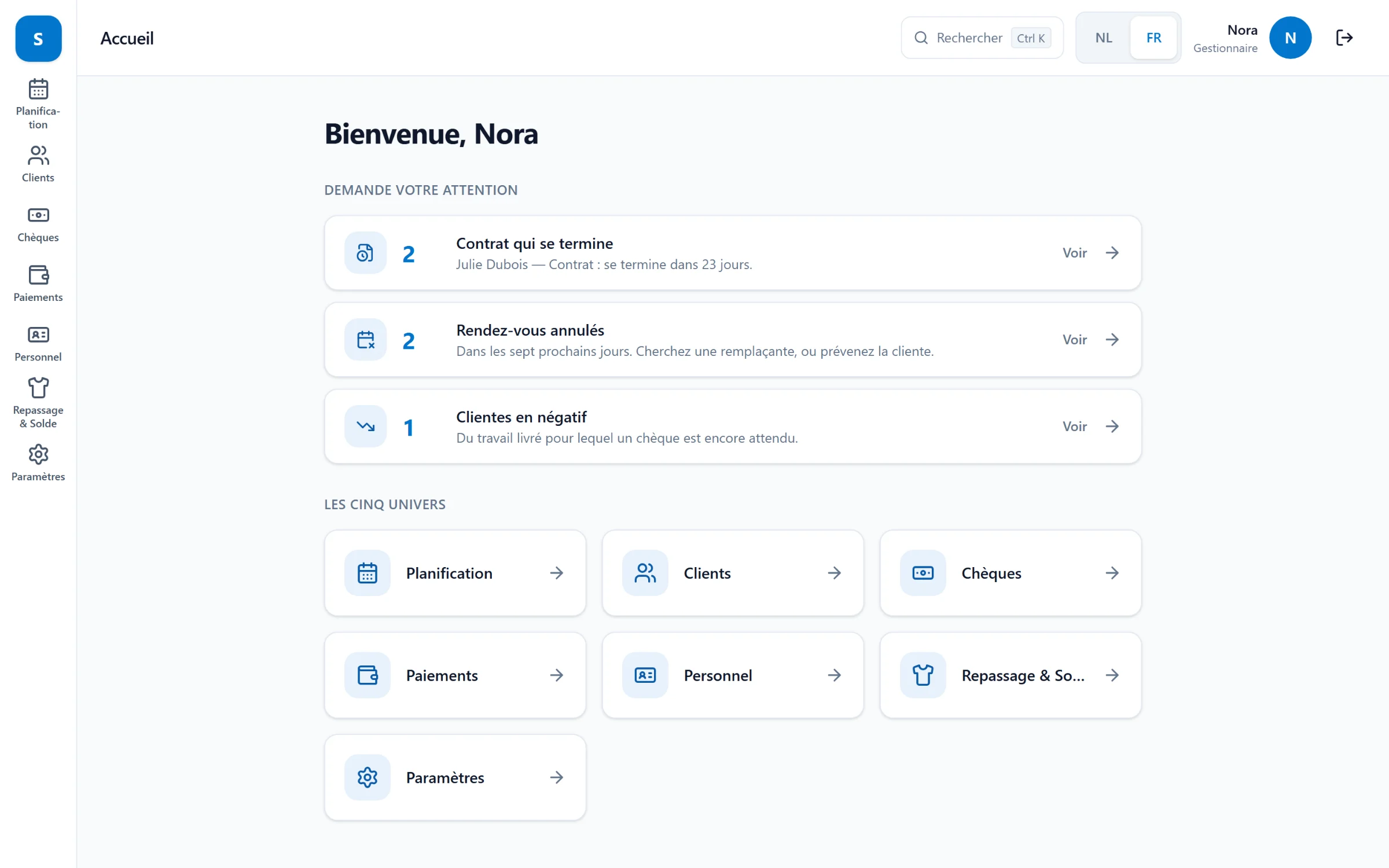
Belvi built three apps around one shared server: a dashboard for scheduling and management, an app on each worker's phone and an app on the tablets in the depots. All three work in French and Dutch. The server is the only source. None of the apps does its own calculations.
The schedule
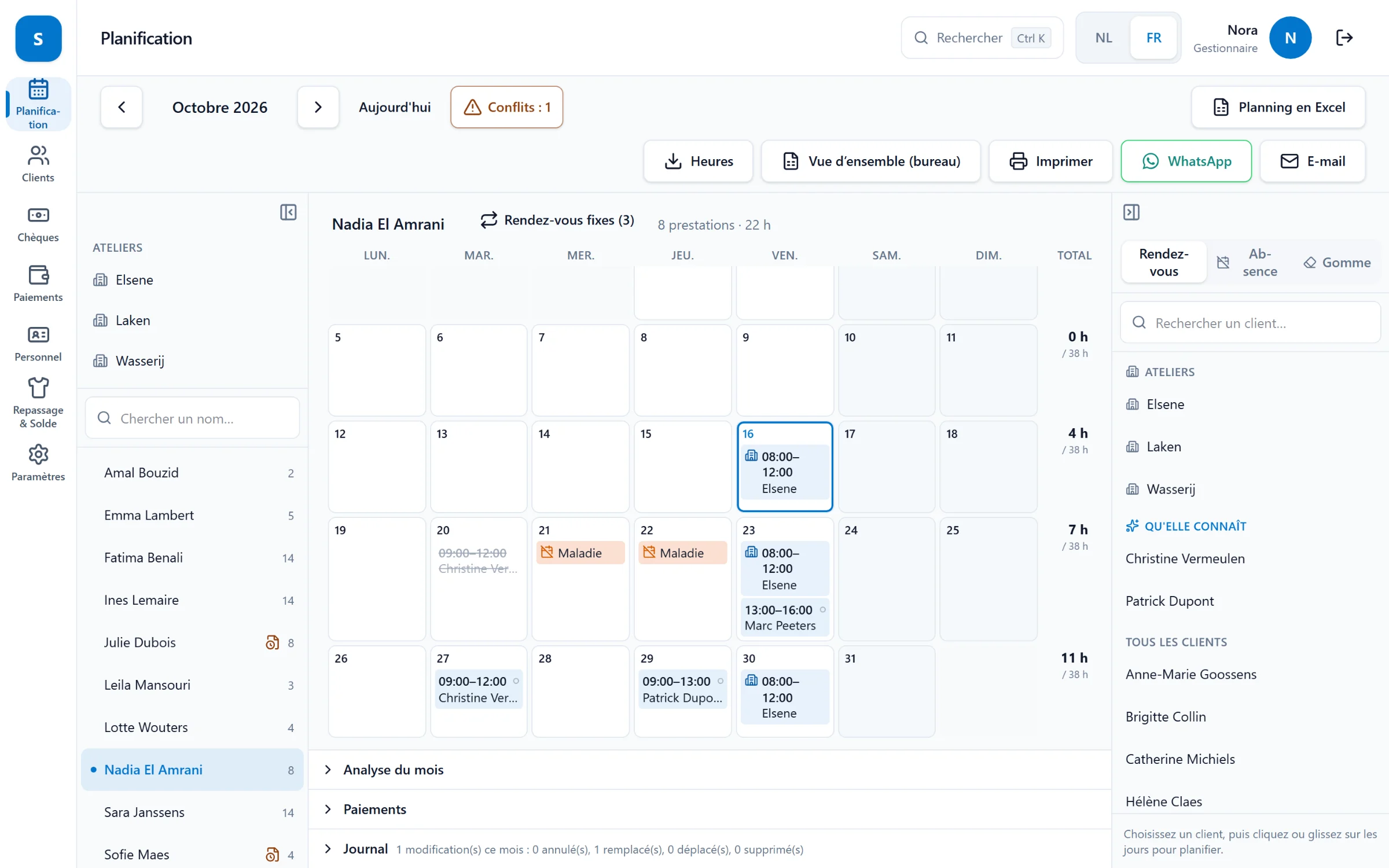
One calendar per worker, per month. Regular appointments run on as a series, absences are shown with their code, and one-off visits are added. When you pick a client, the clients this worker already knows appear at the top.
The system looks for clashes in the actual visits of the month: two visits by the same worker that overlap on the same day. For each conflict you see the date, the visits involved and a button to that day. If a regular appointment appears twice in one week, that also shows up as a warning in the payments.
The schedule goes to the worker on paper, by email or via WhatsApp.
Cover
Covering is one action: you choose who does the visit. Handing it back to the regular worker, or choosing a different replacement, is the same action.
The order is chosen so that a visit is never scheduled twice. First the original is changed, then whatever was left from an earlier attempt is cleared away, and only then is the replacement scheduled. If a step fails, the visit is visibly marked "à terminer" ("to finish"), with one button to complete it.
The app for the workers
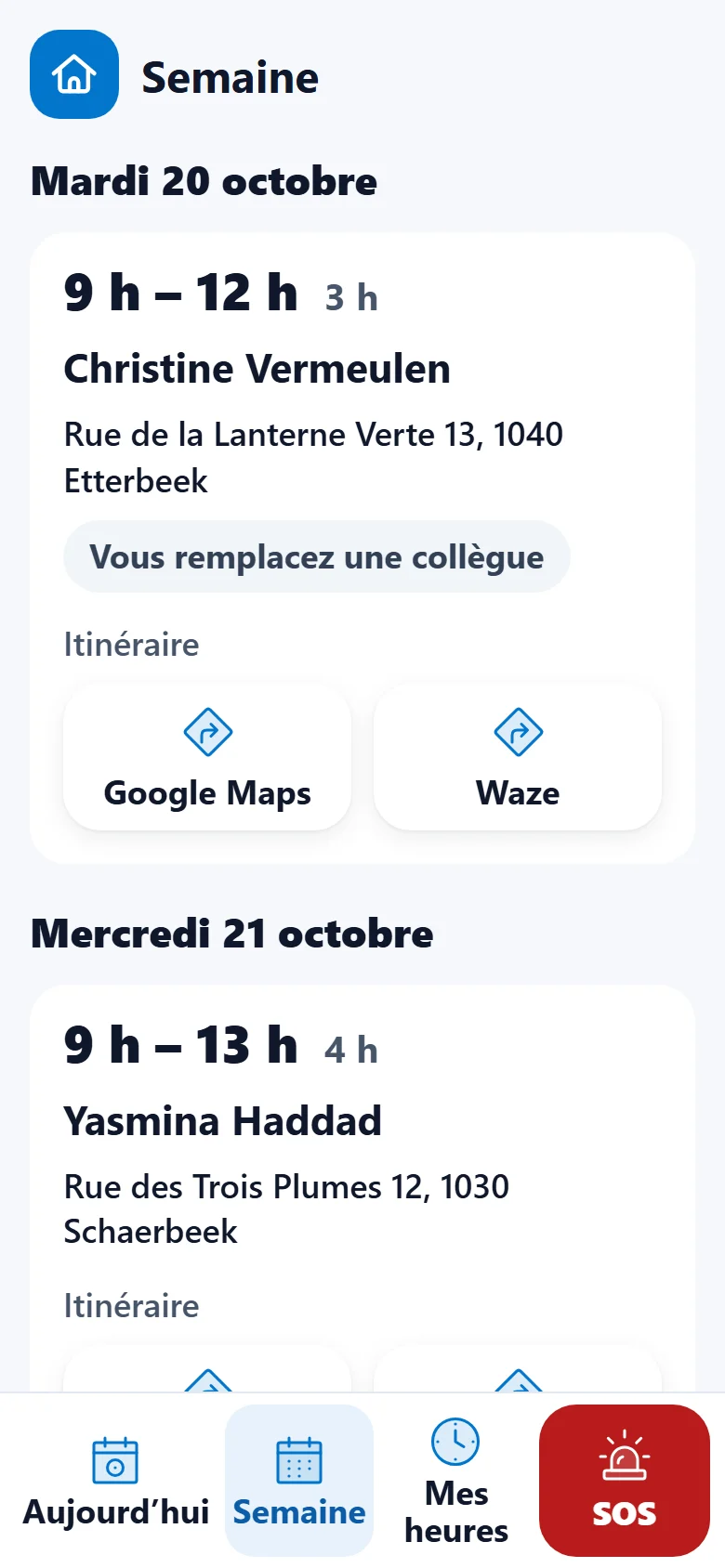
On her own phone a worker sees her schedule for today and the coming week, her hours and an SOS button. On a visit where she covers for someone, it says she is covering for a colleague. If anything changes in her schedule, she gets a notification with the day included. One tap opens that day.
The schedule is encrypted on the phone. Without a network she opens it with her own code. An SOS also goes out when the phone is locked, and the app only says the office has been alerted once the server has actually received the alert.
The app in the depots
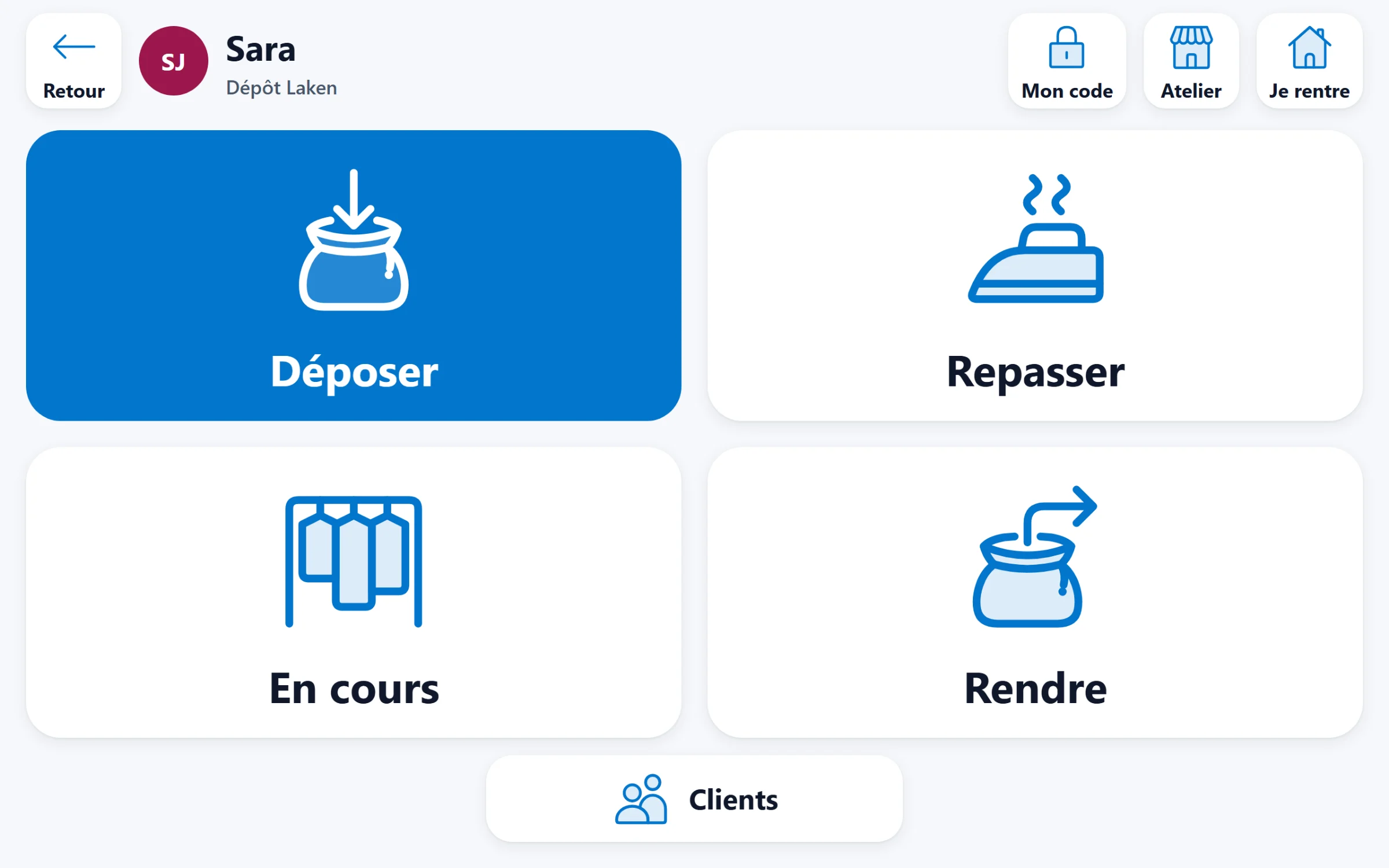
There is a tablet at the counter. A member of staff taps her name, types her code and writes the ironing ticket: find the client, tap the garments, save the ticket with a bag number. Later she marks the bag as ready and hands it over. She also clocks in and out on it.
The screen works with drawings instead of text, with large buttons and with spoken explanations in French in a fixed place. The tablet calculates nothing itself. Every tap goes to the server, and the screen shows what comes back: the lines, the total and the effect on the client's balance.
Why it can be trusted
A mistake in the schedule costs on two sides here: a client nobody turns up for, or a visit that gets paid twice. That is why cover is checked by a test that generates its own random sequences of actions: cover, hand back, cancel, move, add an absence. After every step a visit may be scheduled at most once and count at most once towards pay. Each fix was then temporarily reverted, to see whether that test really fails.
The same applies at the counter. A double tap produces the same ticket, and a screen that has gone out of date in the meantime shows a message instead of a wrong entry.
When it comes to personal data, only those who need it see it. The depot gets no data on clients or colleagues that it does not need. The worker only sees her own visits.
In closing
A client chooses such a company on one question: will someone come. The schedule, the cover and the notification on the replacement's phone are three sides of the same answer.